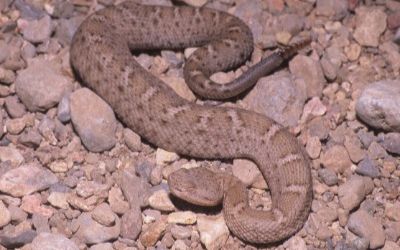
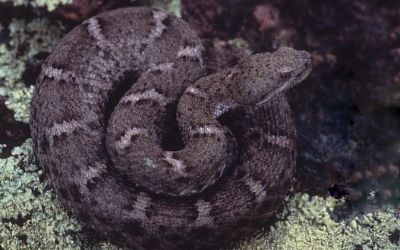
This small, locally distributed, uncommon, and protected rattlesnake is adult at 20-24 inches. Stripping on the sides of the face are present but muted. No striping on the front of the face. Ground color can vary from reddish-gray to sandy gray, and the dorsal pattern consists of dark edged reddish bars. The colors and patterns appear faded or dusty. Variably dark lateral spots are present.. Neonates utilize caudal luring to draw lizards within striking distance. Note the vertical pupils and infrared sensing pit between, but lower than, the nostril and eye. Ovoviviparous. Scales are keeled.
Unique Features:
Striping on the sides of the face is present but muted. No striping on the front of the face. This as well as the colors will identify this little rattler
Habitat and Diet:
Preferred habitats include montane meadows (5,500-9,000 foot elevation) and other such rocky grasslands or scrublands with scattered pines. Preys on small rodents, birds, and lizards






![Get medical help as soon as you can (dial 911 or call local Emergency Medical Services [EMS]). Serious snake envenomation is treated with antivenin.](https://semhandyman.com/wp-content/uploads/2023/12/WhattodoifYouAreBittenbyaVenomousSnake-300x180.png)