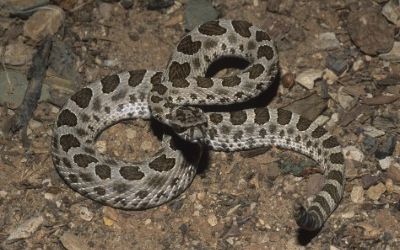
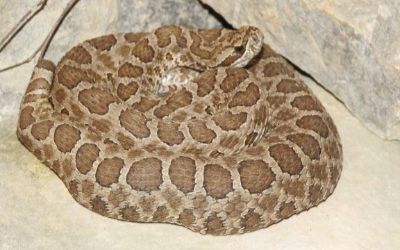
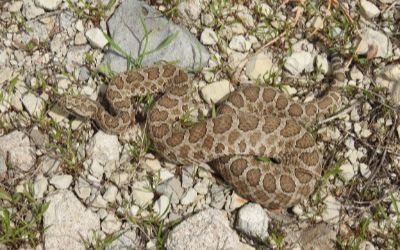
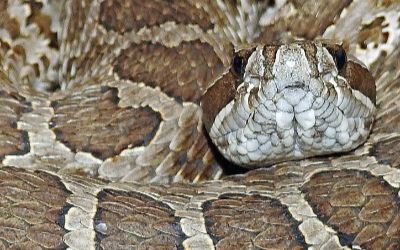
This small (to 2”) dark colored rattlesnake has prominent, rounded, darker, dorsal blotches and 2 rows of alternating lateral spots. Its light colored belly has dusky edges and some spotting. There are 9 large plates on the top of the head. Scales keeled in 25 rows. The rattle is fairly large and quite audible. Note the vertical pupils and infrared sensing pit between, but lower than, the nostril and eye. Ovoviviparous. Neonates like adults in appearance but may have a yellowish or pinkish tailtip and venter.
Unique Features:
2 rows of alternating lateral spots. Its light colored belly has dusky edges and some spotting. There are 9 large plates on the top of the head.
Habitat and Diet:
Grasslands and brushy prairies, often near water. Prey items are small rodents, ground dwelling birds, amphibians, and lizards.




![Get medical help as soon as you can (dial 911 or call local Emergency Medical Services [EMS]). Serious snake envenomation is treated with antivenin.](https://semhandyman.com/wp-content/uploads/2023/12/WhattodoifYouAreBittenbyaVenomousSnake-300x180.png)