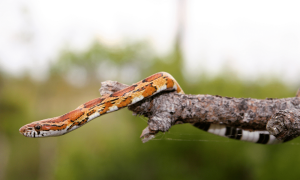
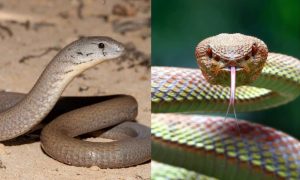
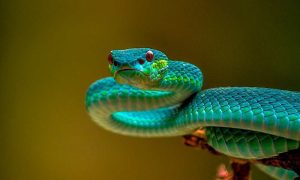
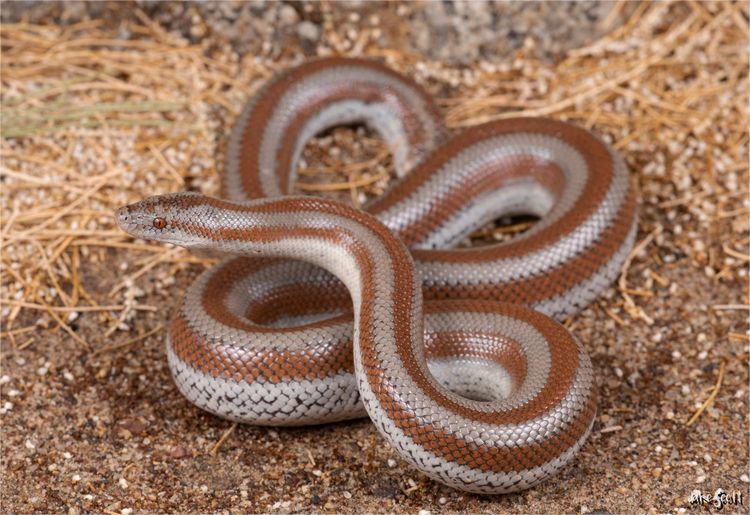
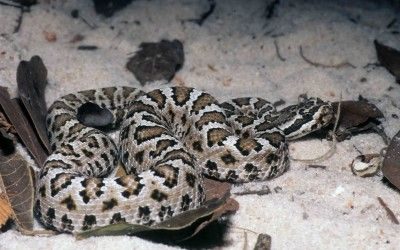
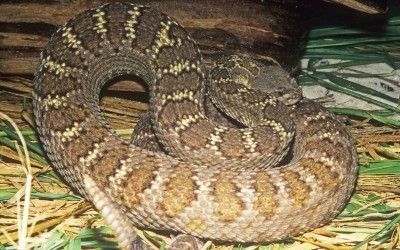
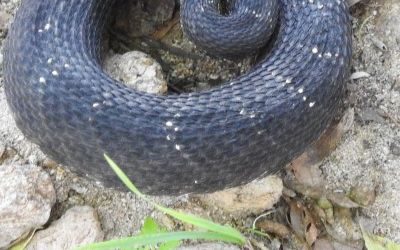
Gray through various shades of brown to black. A great amount of metachrosis (color changing) is possible, rendering snakes that are black by day and brown at night. This rattler is adult at 3 to 4 ½’. Large, dark dorsal blotches are often separated by thin yellow bars. Dorsal and lateral markings may be largely obscured on black individuals. Neonates are light gray with prominent dorsal and lateral markings. Habitats include desert scrub, grasslands, and open oak woodlands, often near water. Note the vertical pupils and infrared sensing pit between, but lower than, the nostril and eye. Scales keeled. This rattlesnake is not particularly defensive, but all due care should be used when in their habitat.
Unique Features:
Very variable. Large, dark dorsal blotches are often separated by thin yellow bars but the snake may be brown with white markings or even other combinations. Ovoviviparous.
Habitat and Diet:
Includes desert scrub, grasslands, and open oak woodlands, often near water. . Preys on small rodents, ground nesting birds, and lizards





![Get medical help as soon as you can (dial 911 or call local Emergency Medical Services [EMS]). Serious snake envenomation is treated with antivenin.](https://semhandyman.com/stag/wp-content/uploads/2023/12/WhattodoifYouAreBittenbyaVenomousSnake-300x180.png)