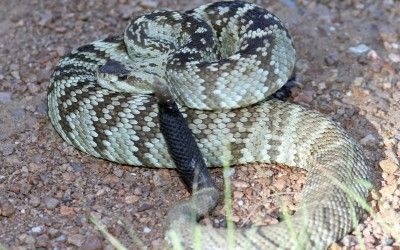
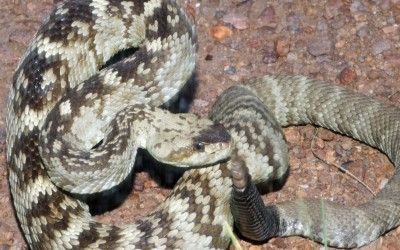
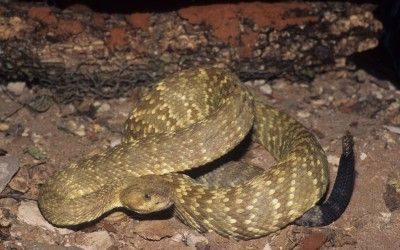
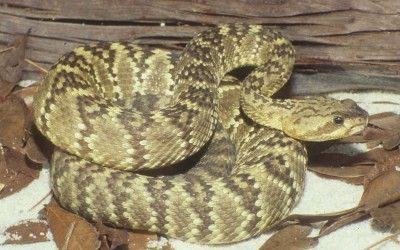
A pretty and usually defensively responsive, 3 to 3 ½ foot long rattlesnake of both mountain and lowland habitats. Ground color varies from greenish to buff to charcoal. Darker colors are often associated with high elevations. Patterned dorsally with dark crossbands and saddles, and both are light-centered. Tail of adults unpatterned black. Juveniles are similar but the tail is banded. Note the vertical pupils and infrared sensing pit between, but lower than, the nostril and eye
Unique Features:
Note the vertical pupils and infrared sensing pit between, but lower than, the nostril and eye. Tail of adults unpatterned black. Juveniles are similar but the tail is banded
Habitat and Diet:
This rattlesnake is most often encountered in mountain canyons, arroyos, or rocky roadcuts and rock-strewn lowlands. It often crosses or basks on roads after dark. Primarily feeds on small mammals, birds and lizards.




![Get medical help as soon as you can (dial 911 or call local Emergency Medical Services [EMS]). Serious snake envenomation is treated with antivenin.](https://semhandyman.com/stag/wp-content/uploads/2023/12/WhattodoifYouAreBittenbyaVenomousSnake-300x180.png)