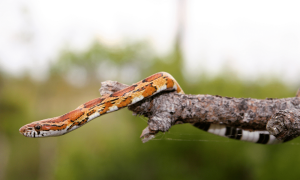
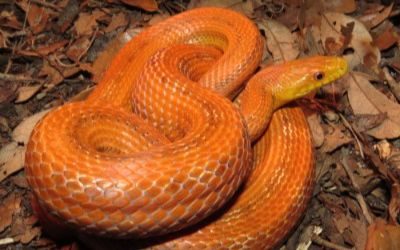
Once common, these large, harmless, but often feisty, semi-arboreal snakes have been largely overwhelmed by intergradation with the yellow rat snake. This orange rat snake once occurred in vast numbers and is still occasionally seen near Lake Okeechobee, FL. Orange above and below, red tongue, faded stripes. Scales are smooth on the sides and weakly keeled on the back. Oviparous. Hatchlings pinkish gray with darker pinkish gray markings.
Unique Features:
The orange body color and 4 faded stripes will identify this snake. Rat snakes, as a group, will hiss if frightened and will often vibrate the tail. This latter, if in dried grass or leaves, will make a whirring sound that is rather similar to the noise of a rattlesnake.
Habitat and Diet:
Open woodlands, edge situations, old buildings, trash heaps, fields, and almost any other terrestrial situation may harbor Everglades rat snakes. They are excellent climbers and may ascend high in trees. Rodents, birds, and lizards are the preferred prey items of this powerful constrictor.






![Get medical help as soon as you can (dial 911 or call local Emergency Medical Services [EMS]). Serious snake envenomation is treated with antivenin.](https://semhandyman.com/stag/wp-content/uploads/2023/12/WhattodoifYouAreBittenbyaVenomousSnake-300x180.png)