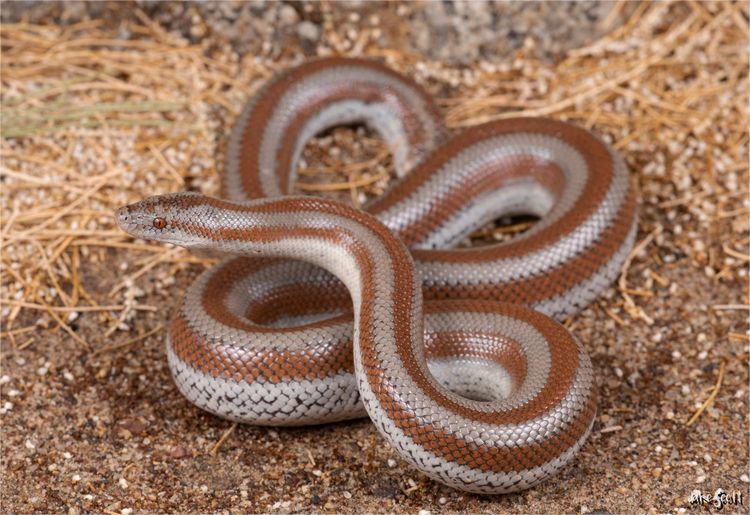
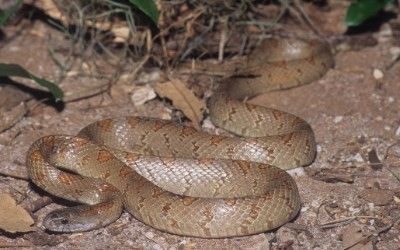
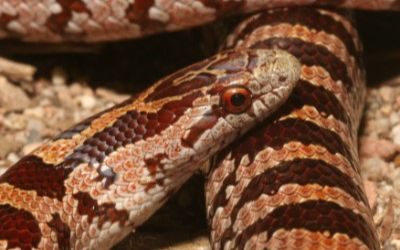
Primary color of this burrowing snake varies from reddish-gray through cinnamon to red. Wide grayish-red, orange, to deep red bars along the back for the entire length of body and tail, narrow spotting or barring along sides. Oviparous. Juveniles are more brightly colored than adults. Rearward directed spearpoint on top of head. 2 dark lines on neck. Scale rows may vary between 21 and 27. Scales are smooth. 2 ½ to 3 ½ feet long.
Unique Features:
Rearward directed spearpoint on top of head. 2 dark lines on neck. Several dark lines radiating outward from eye. Blotches on back and sides tend to lack darker edging. Geographic range will help.
Habitat and Diet:
Prairie land, homesteads, ranches, open country. Often found near abandoned houses, old barns, or other structures that draw rodents, reptiles, and other such prey items.



![Get medical help as soon as you can (dial 911 or call local Emergency Medical Services [EMS]). Serious snake envenomation is treated with antivenin.](https://semhandyman.com/stag/wp-content/uploads/2023/12/WhattodoifYouAreBittenbyaVenomousSnake-300x180.png)