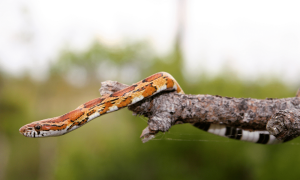
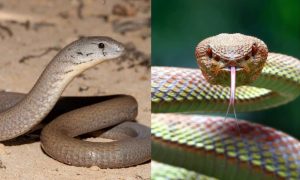
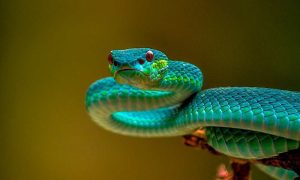
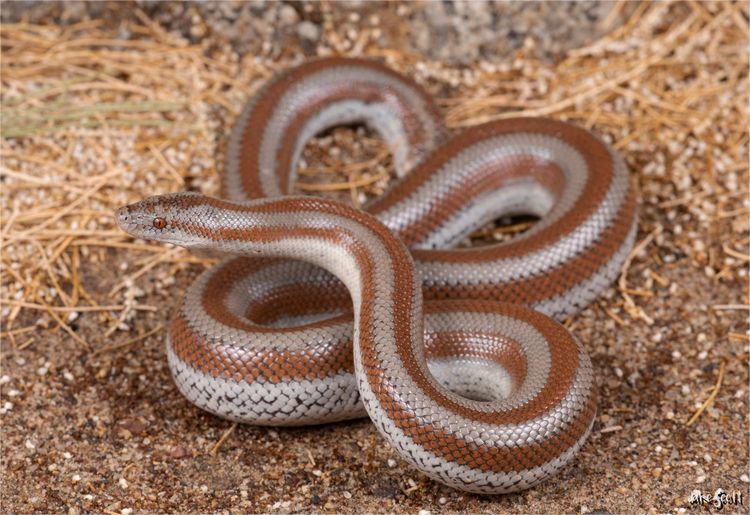
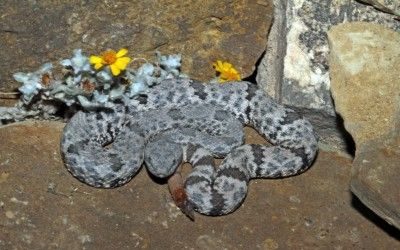
One of the smaller (about 2’) rattlesnakes, this is the northeasternmost subspecies of rock rattler. It may be found in suitable habitats through the southwestern quadrant of TX. This is a greenish, greenish-gray, gray, reddish, or bluish-gray snake that has a mottled, dusty, appearance including on the rough-edged darker bars. The more westerly populations are a bit more precisely patterned than those in the east. There is a dark stripe from eye to angle of jaw. Belly pretty much like dorsum in color. Scales keeled. Ovoviviparous. Neonates have yellow tailtips. The yellow fades with growth and age. Note the vertical pupils and infrared sensing pit between, but lower than, the nostril and eye. Note the vertical pupils and infrared sensing pit between, but lower than, the nostril and eye
Unique Features:
This is a greenish, greenish-gray, gray, reddish, or bluish-gray snake that has a mottled, dusty, appearance including on the rough-edged darker bars
Habitat and Diet:
This rattlesnake is most often encountered in mountain canyons, arroyos, or rocky roadcuts but occasionally may wander across roads after dark. Preys on small rodents, amphibians, and lizards





![Get medical help as soon as you can (dial 911 or call local Emergency Medical Services [EMS]). Serious snake envenomation is treated with antivenin.](https://semhandyman.com/stag/wp-content/uploads/2023/12/WhattodoifYouAreBittenbyaVenomousSnake-300x180.png)