Alternate Name(s):
Water Mocassin
Venom Status:
Venomous
Characteristics:
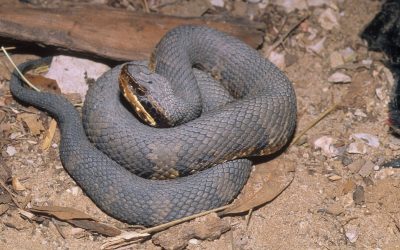
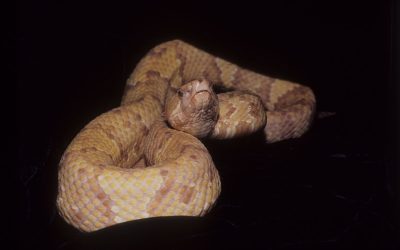
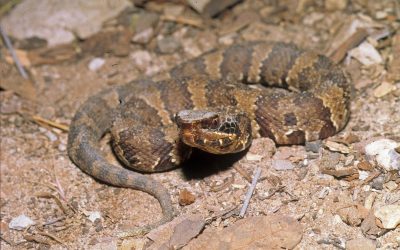
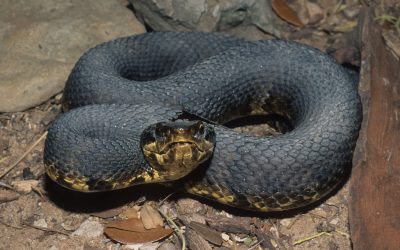
Also known as the “water moccasin.” The name “cottonmouth” is derived from the cottony white color of the mouth interior. The snake will throw its head back and gape widely if threatened, displaying the cotton color. Ground color may vary individually between black, brown, or olive-green. Dorsal banding is largely obscure on the black or brown snakes, but may be well defined on the olive-green examples. Head and facial markings often faint on adults of all colors. Note the vertical pupils and infrared sensing pit between, but lower than, the nostril and eye. Ovoviviparous. Babies brightly banded in tans and russet and have a yellow tail tip. There are 25 scale rows. Use geographic range to determine subspecies
Unique Features:
Cottonmouths of all 3 subspecies often bask or forage well back from the water, to which they will usually attempt to return if startled. Their escape route may bring them directly toward the startling object—human included. They may also bask or seek road-killed animals as a food source on roadways, paved or unpaved. The name “cottonmouth” is derived from the cottony white color of the mouth interior.
Habitat and Diet:
Can be found in brush tangles on the banks of ponds, sloughs, lake edges, swamps, spillways, and other such aquatic habitats are home to this semi aquatic snake. Primarily feeds on fish, amphibians, small mammals, small birds; roadkills.
Geographic Range:
AL, MS, LA, AR, TN, MO, OK, TX, GA, SC, NS, VA, KY,


![Get medical help as soon as you can (dial 911 or call local Emergency Medical Services [EMS]). Serious snake envenomation is treated with antivenin.](https://semhandyman.com/stag/wp-content/uploads/2023/12/WhattodoifYouAreBittenbyaVenomousSnake-300x180.png)