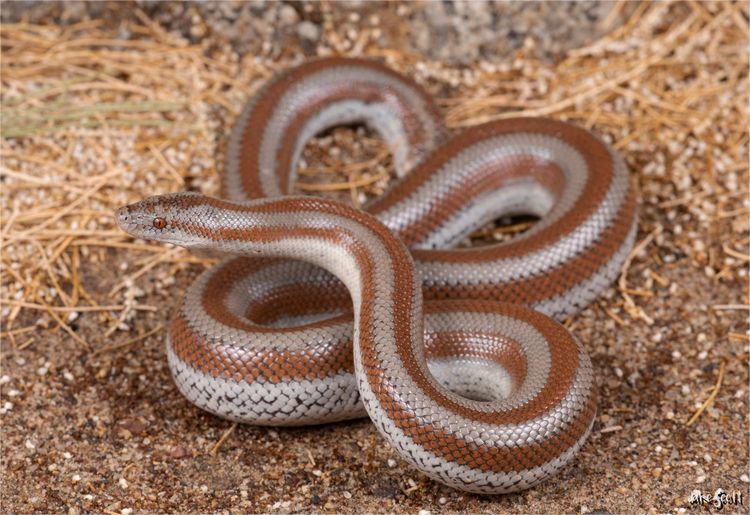
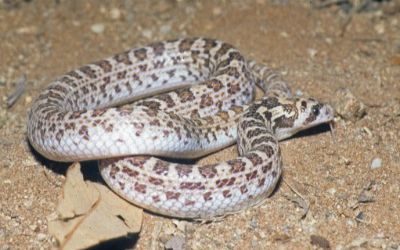
This small (adult at about 18”) snake has a dorsal color of tan, yellowish, or more rarely, with a very pale pinkish blush. Small brown dorsal saddles and lateral spotting. The rostral (nosetip) scale is enlarged and free-edged. The belly is white. This nocturnal snake burrows in coarse sand, gravel, and rocky desert where creosote bush occurs. It often becomes surface active on warm humid or rainy nights. Scales are usually smooth but are occasionally weakly keeled. Oviparous.
Unique Features:
The rostral (nosetip) scale is enlarged and free-edged and the dorsal markings are in the form of narrow bars and spots. Together these features should allow you to identify this snake.
Habitat and Diet:
This nocturnal snake burrows in coarse sand, gravel, and rocky desert or brushland soils. Prey consists primarily of lizard eggs and may be even more specifically restricted to banded geckos and their eggs.






![Get medical help as soon as you can (dial 911 or call local Emergency Medical Services [EMS]). Serious snake envenomation is treated with antivenin.](https://semhandyman.com/stag/wp-content/uploads/2023/12/WhattodoifYouAreBittenbyaVenomousSnake-300x180.png)