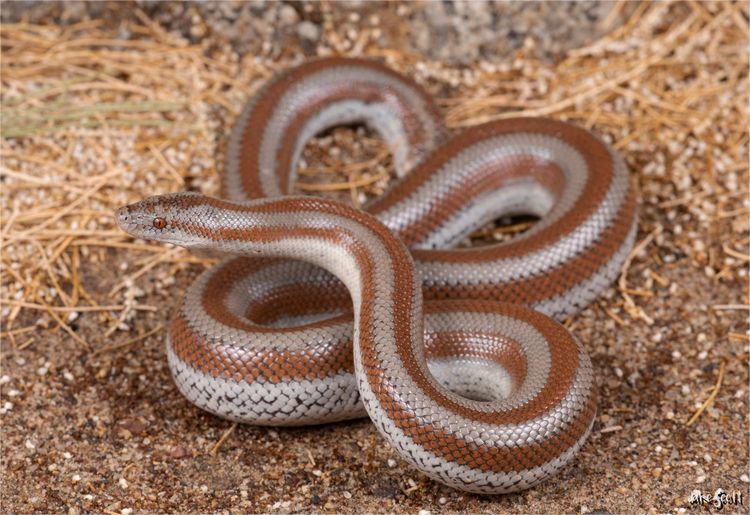
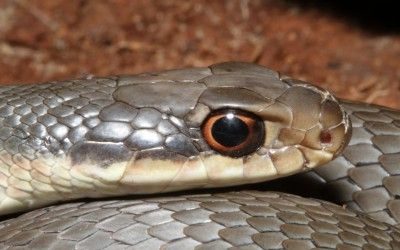
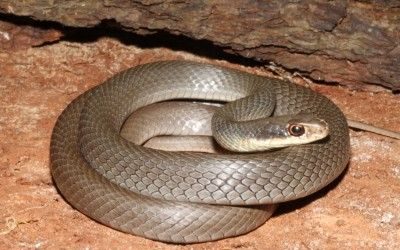
This racer is slate gray, pale gray-blue, very pale green, or pale brown above, very pale grayish-white with occasional darker clouding below. Chin and throat lighter. The hatchlings are lighter than the adults (often pinkish or reddish-brown)) and usually strongly patterned with darker dorsal saddles Scales are smooth, in 17 rows to and beyond midbody, and 15 rows posteriorly. Anal scale is divided. Pupil round. Eye usually reddish.
Unique Features:
These fast snakes often hunt by “periscoping,” their head held well above the grasses or weeds in which they are searching for their prey of lizards, frogs, baby turtles, small snakes, and the nestlings of ground dwelling birds or mammals. As would befit snakes with such hunting techniques, the eyes are large and vision is acute. When defensive, racers often shake or vibrate their tail. When amidst dead leaves and grasses this produces a sound somewhat similar to that of a disturbed rattlesnake.
Habitat and Diet:
The lowlands of southern mainland Florida and the Upper Florida Keys. Primarily feeds on lizards, frogs, baby turtles, small snakes, and the nestlings of ground dwelling birds or mammals.





![Get medical help as soon as you can (dial 911 or call local Emergency Medical Services [EMS]). Serious snake envenomation is treated with antivenin.](https://semhandyman.com/stag/wp-content/uploads/2023/12/WhattodoifYouAreBittenbyaVenomousSnake-300x180.png)