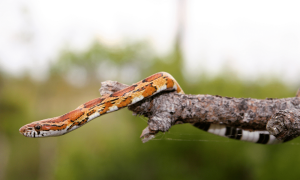
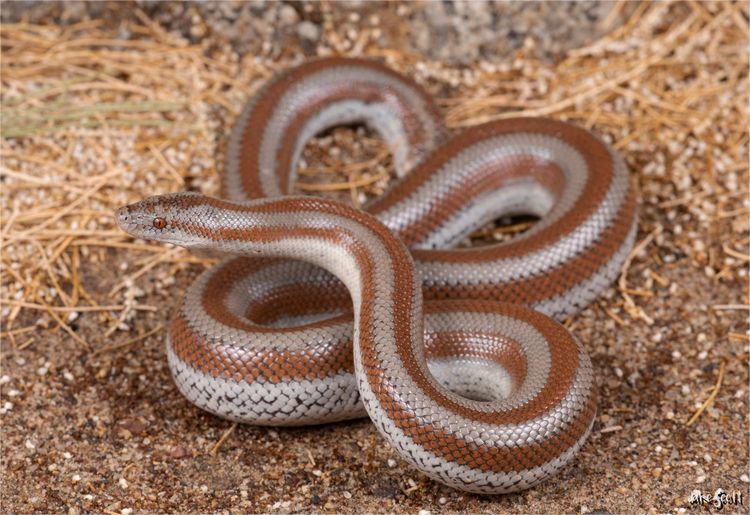
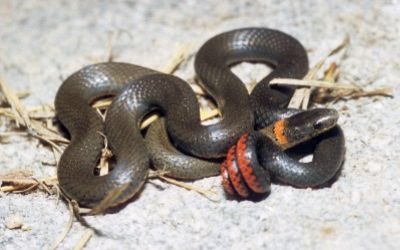
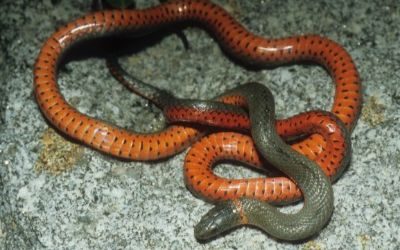
Differentiating the several subspecies of ring-necks can be quite difficult. In most cases it will depend on the size of the neck ring, the position of the spotting on the belly, and, when available, the number of scale rows. Except at the edges of each subspecies range where intergradation may occur, perhaps your most reliable identifying tool will be the range maps. Rear-fanged; the mild venom helps immobilize prey. Usually harmless to humans. Neck ring narrow. Bright orange-red belly. Belly spots profuse and most are positioned regularly along edges of belly scutes. Often extends and coils its tail in a defense posture. 15-20” long. Smooth scales in 17 rows. Oviparous
Unique Features:
Neck ring narrow. Profuse belly spots, most positioned regularly, one row along each side of ventral scutes. 17 scale rows in neck area
Habitat and Diet:
Moist areas; often found beneath rocks or surface debris.Prey includes salamanders, tiny snakes, lizards, slugs, and worms.




![Get medical help as soon as you can (dial 911 or call local Emergency Medical Services [EMS]). Serious snake envenomation is treated with antivenin.](https://semhandyman.com/stag/wp-content/uploads/2023/12/WhattodoifYouAreBittenbyaVenomousSnake-300x180.png)