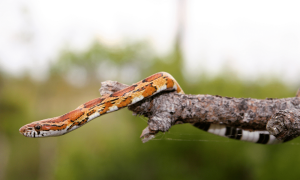
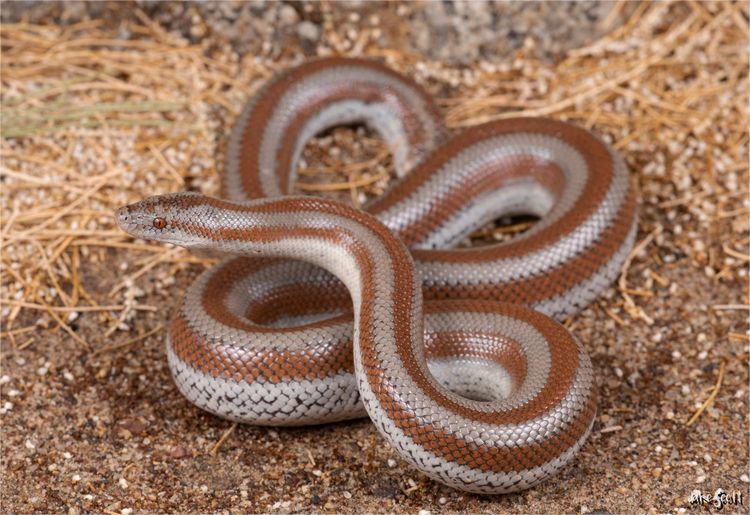
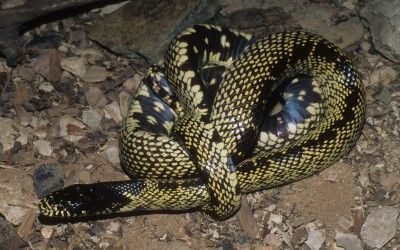
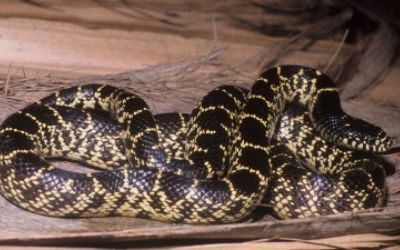
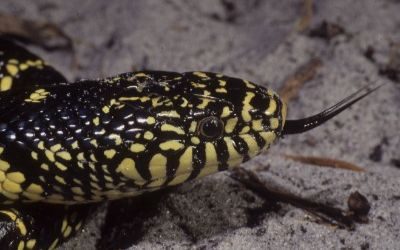
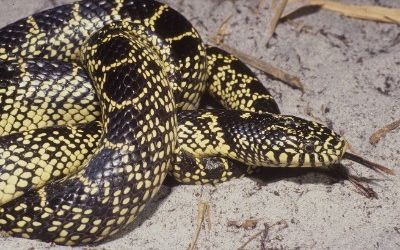
This, like other kingsnakes, is immune to the venom of pit vipers. Adult at 3 to 4 ½ feet long.A dark snake with a white or yellow spot in the center of many lateral scales. Dorsal area black or dark brown with rings of light spots forming a chain pattern. Belly white to yellow with many variably shaped dark markings. Broad area of intergradation with the speckled kingsnake in KS, OK, TX. Smooth scales. Oviparous. Hatchlings have spotted sides and dorsal crossbands.
Unique Features:
The pattern of white or yellow spots on the dark sides will identify this kingsnake.
Habitat and Diet:
This snake may be found in a wide variety of habitats. Often seen in the vicinity of water. Prey of these powerful constrictors includes small mammals, birds, lizards, hatchling turtles, snakes including venomous species, and amphibians.




![Get medical help as soon as you can (dial 911 or call local Emergency Medical Services [EMS]). Serious snake envenomation is treated with antivenin.](https://semhandyman.com/stag/wp-content/uploads/2023/12/WhattodoifYouAreBittenbyaVenomousSnake-300x180.png)