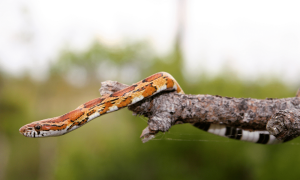
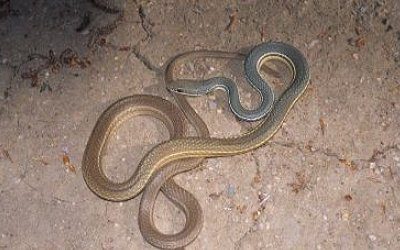
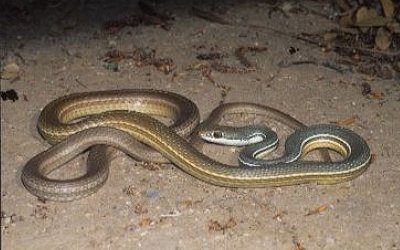
Ground color of this long (to 5+ feet), slender, alert, and agile, brushland snake is bluish-gray anteriorly and paler (often yellowish) at midbody, and reddish-gray posteriorly. Light lateral striping is cream to yellow and there are 2 thin dark stripes in the yellow field. Belly is creamy yellow, brighter posteriorly. Spotted black and white pattern on sides of face. The throat is white. This snake is an agile climber. This snake “periscopes” when hunting. Smooth scales. Oviparous. Hatchlings similar to adults.
Unique Features:
Gray dorsal color becomes yellowish posteriorly. Black and white on face.
Habitat and Diet:
Desert thornscrub to montane woodlands. Prey of this snake includes nestlings of small mammals, birds, and lizards.






![Get medical help as soon as you can (dial 911 or call local Emergency Medical Services [EMS]). Serious snake envenomation is treated with antivenin.](https://semhandyman.com/stag/wp-content/uploads/2023/12/WhattodoifYouAreBittenbyaVenomousSnake-300x180.png)