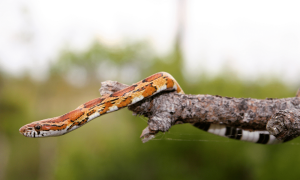
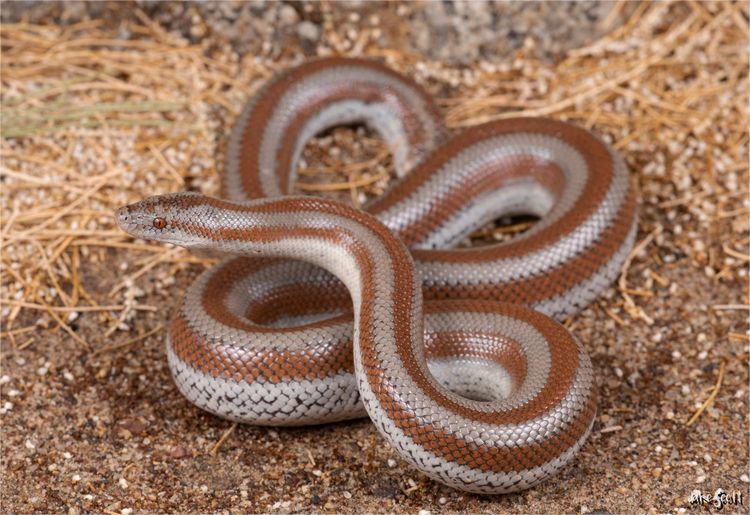
This 20-30” long snake is immune to the venom of pit vipers. Dull-red saddles are often about the same width as the white/gray ground color and are bordered by black. Ground color gray. Gray nose may be flecked with black. Very secretive. Anterior lateral spots small or absent. Ground color white or very light gray. Black edged white collar immediately behind head. Gray nose may be flecked with black. A black midventral line often connects all blotches. Anal plate single. Occasionally surface active on warm rainy nights, especially during the spring breeding season.
Unique Features:
Black flecked gray nose black midventral line are often diagnostic, as is range.
Habitat and Diet:
Very secretive. Hides beneath surface debris (especially flat rocks, tin, and lumber), and occasionally behind loose bark shards on standing trees (especially pines), or in rotting stumps. Feeds largely on lizards but also preys on nestlings of ground nesting mammals and bird, amphibians, and small snakes.





![Get medical help as soon as you can (dial 911 or call local Emergency Medical Services [EMS]). Serious snake envenomation is treated with antivenin.](https://semhandyman.com/stag/wp-content/uploads/2023/12/WhattodoifYouAreBittenbyaVenomousSnake-300x180.png)