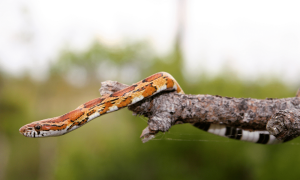
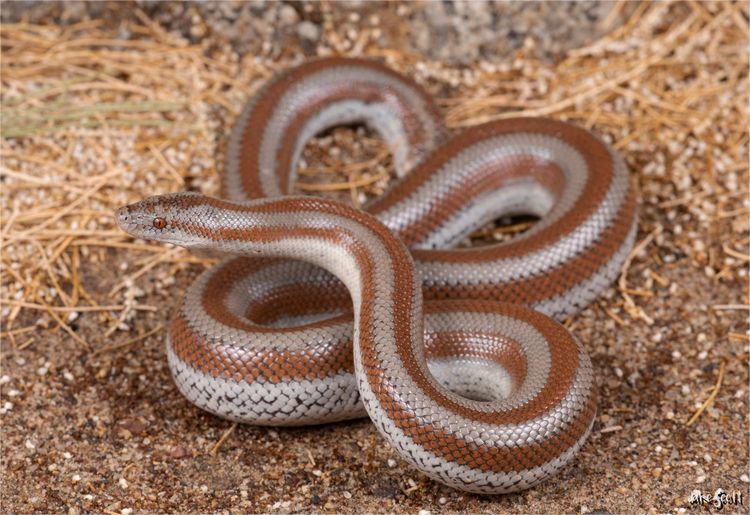
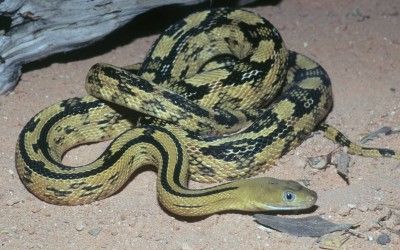
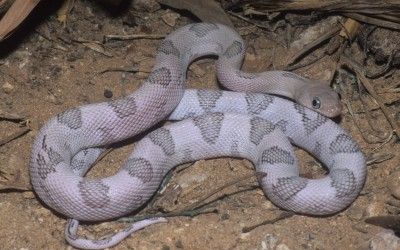
This moderately slender, supple, aridland constrictor attains a length of 3 to 5 feet. Ground color may vary from pale tan, through straw yellow, to blonde, orange, or silvery gray. The latter is a hobbyist contrived color but a few escapees or releases have now been found. The markings can differ markedly. On most, the neck bears a pair of black dorsolateral stripes. After a few inches the pattern becomes a series of separated dorsal “ H”s. On the blond and the silver color morphs both of these characteristic patterns are lacking. Instead the overall pattern is of blotches that are not much darker than the ground color. The anterior blotches are well separated and those posteriorly are closer together
Unique Features:
There is a row of small scales, the suboculars from which the snake derives its species name, between the eye and the upper labial (lip) scales
Habitat and Diet:
Rocky areas of the Chihuahuan Desert, including flats, canyons, roadcuts, and ground squirrel towns. Primarily feeds on Lizards; small mammals and nestling birds





![Get medical help as soon as you can (dial 911 or call local Emergency Medical Services [EMS]). Serious snake envenomation is treated with antivenin.](https://semhandyman.com/stag/wp-content/uploads/2023/12/WhattodoifYouAreBittenbyaVenomousSnake-300x180.png)